

In this article
Digital Heart

Key takeaways
- Sofokus founder Teemu Malinen uses the term digital heart for a modern digital platform designed to support a company’s business operations as fully as possible.
- You cannot buy a digital heart off the shelf. It is usually integrated with dozens or even hundreds of other systems and passes data between the company’s functions.
- Malinen argues that no ready-made software can keep up with fast-paced business. In his view, a tailored system is the only sustainable way to build a lasting competitive advantage, and settling for ready-made products means falling behind.
- Malinen describes how digital technology moved in a couple of decades from a static homepage in 1994 to the core of operations, and notes that companies such as Google, Amazon and Verkkokauppa.com, which invested in their own digital hearts, now hold strong market positions.
- To Malinen, platform economy, API economy and data economy seem to emphasise different aspects of business built around a digital platform. A company can build a digital heart without any of these models, but the digital heart makes it possible to adopt them later.
Modern (business) operations center around a digital heart, which has been perfectly designed to support the activities of the enterprise. Think of Wolt, Smartly or EasyPark – without a steadily beating digital heart these companies would fade away. Below you can read about how digital platforms are finding their way to the center of operations.
What is a digital heart?
Digital heart is a term I developed to describe a modern digital platform which has been designed to lend as much support to the features of given (business) operations as possible. A digital heart cannot be bought off the shelf; instead, it typically requires years of honing to perfectly support the business.
A digital heart is usually integrated into dozens (even hundreds) of other systems, creating a nerve center that enables seamless transfer of information between the various functions of the company. A digital heart pumps data to other systems, feeding them information that is vital to the functioning of the organization.
A digital heart is the ERP system of tomorrow.
Why is having a digital heart so crucial to a company?
In the world of business, setting yourself apart can be challenging, with clients wanting better service and more options across the entire organization. Making your company’s services and brand available in a way that’s relevant to the client is extremely hard work.
Digitalization has for 10–15 years been thought to offer a solution to this problem, but in practice digital software products haven’t been able to provide sufficient support to business activities. A particular sore point can be found in changing business environments.
Simply put, no ready-made piece of software can keep up with the demands of fast-pace business.
Until now, organizations haven’t been ready to acknowledge that a “tailored system”, once a dirty word, is in fact the only sustainable solution when it comes to trying to achieve a lasting and continuously growing competitive advantage. Off-the-shelf products have no place in this game.
Take Verkkokauppa.com, for example. If I’m not mistaken, in the late 1990s they were the first supplier of computer components to feature a free text search on their website while other companies were still using static (often outdated) lists. I bet the company would name consistently investing in their own digital heart as the key to Verkkokauppa.com’s success.
The company’s IT Development Manager Henrik Weckström once noted on Tivi: “Buying a system off the shelf gets you a system that’s just as good as everyone else’s.”
Talk about hitting the nail on the head. Having a digital nerve center of one’s own creates a competitive advantage in a market where settling for ready-made products means you’ll soon be lagging behind.
Migration of digital platforms to the core of operations
To paint a clear picture, here’s a simple chart of how digital software technology has changed the way of making exceptional and winning business in the age of the internet.
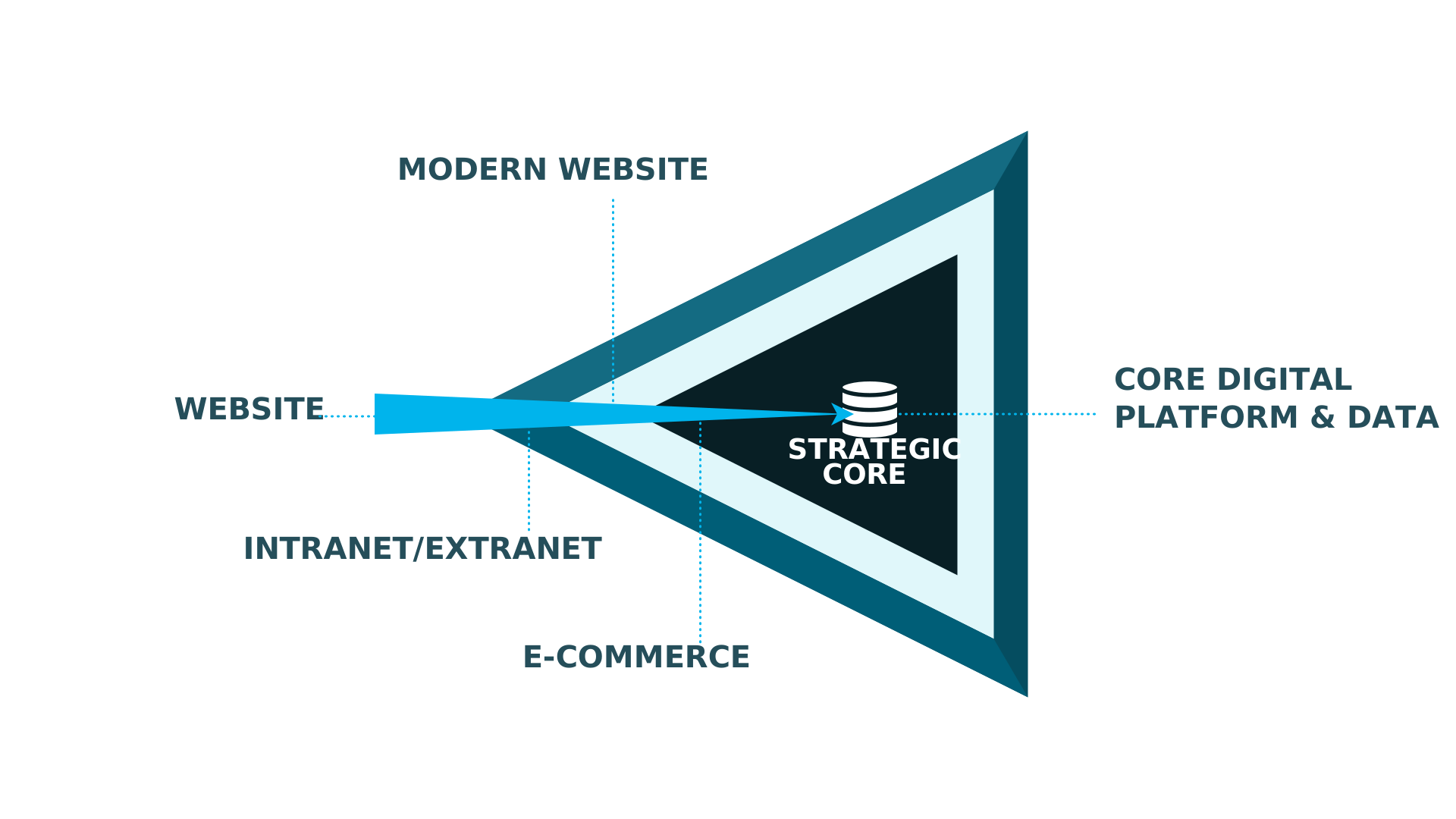
In 1994, the best thing internet technologies could offer companies was a static business card. The so-called homepage was completely separate from the core processes of the company. Little by little, data was first provided to partners (extranet) and the company’s own staff (intranet), followed by the emergence of online stores. This meant that the support systems of digital technology and the company’s actual business activities began to converge, enabling the company to gain a competitive edge.
Today companies are allowed to admit that a winning strategy cannot ignore digital solutions. It’s also worth noting that digital hearts have been built before and that those who have invested in the them now occupy a strong position in their respective markets (Google, Amazon, verkkokauppa.com etc.).
From the outer edge of business to the core in a couple of decades.
Planning to renew your online store? We start from your sales goals and how your customers buy. The platform is one decision among others.
Explore e-commerce developmentPlatform economy, API economy and data economy
Today, platform economy, API economy and data economy are all the buzz. They refer to operational (business) models that center around a digital platform and to me seem to emphasize different aspects of the same theme.
The platform economy focuses heavily on networking with all stakeholders with the aim of creating a network effect. The API economy creates business opportunities by relying on application programming interfaces. The data economy concentrates on the information a company possesses and capitalizes on its uses. In the end, everything boils down to the same thing – only the point of view changes.
The most important thing is to realize that a digital heart can be built without any of the business models mentioned in this blog post. On the other hand, a digital heart makes it possible to use these models and implement them at a later stage as needed. This is in stark contrast to off-the-shelf software, which will only take you as far as the limitations of the particular product allow.
A digital heart will prepare you and your business for the age of platform/API/data economy.
How to get started?
Building your own digital heart requires years of work. Don’t delay getting started, since I can practically guarantee that someone in your field is already working on creating theirs. To begin the process, find out about your stakeholders’ future needs, the valuable data your organization possesses and so on. I strongly recommend testing the concept both within and outside your company before starting to work on building your own digital platform.
Frequently asked questions
Malinen developed the term for a platform built around one company’s business rather than a generic product. It is connected to many other systems and feeds them the data the organisation needs to function. He calls it the ERP system of tomorrow.
In Malinen’s view, no ready-made software can keep up with the demands of fast-paced business. He quotes Verkkokauppa.com’s IT development manager Henrik Weckström, interviewed by Tivi: a system bought off the shelf is just as good as everyone else’s. Building a digital heart that fully supports the business typically takes years.
Malinen sees them as business models that centre on a digital platform. Platform economy builds networks with all stakeholders to create network effects, API economy creates business opportunities through application programming interfaces, and data economy capitalises on the information a company holds. A digital heart lets a company adopt these models later, while off-the-shelf software limits it to what the product allows.
Malinen advises starting without delay, because he expects someone in your field is already building theirs. Begin by finding out your stakeholders’ future needs and the valuable data your organisation already has, and test the concept both inside and outside the company before building the platform.
Sources

About the author
Founder & Chairman
Teemu Malinen
Teemu writes about digital business trends, modern company culture and startup investments.
Related articles
Keep reading
-
7 predictions on the future of Digital Commerce

-
10 reasons to take a digital leap
Should your company take a Digital Leap? Or maybe or more smoother Digital Slide would be a better choice? Read this blog and find…
-
What is Composable Commerce?
What is Composable Commerce? And how does it compare with other models of building digital commerce. Check this blog and find out.