

The Finnish Business and Policy Forum EVA
Modernising EVA’s Value Bank streamlines research data management and presentation
The Finnish Business and Policy Forum EVA has been monitoring Finnish values and attitudes across various areas of society since 1984. This long-term survey work has built up a value bank: an exceptionally comprehensive knowledge base widely used in research, media, decision-making, and education.
Over the years, the volume of data in the value bank has grown considerably, but its management and presentation needed more modern tools. The value bank modernisation focused on making research data easier to manage, visualise, and utilise – both in EVA’s own work and for wider societal use.
We have high expectations that we'll be able to significantly improve data management and visualisation. We can save a lot of money when outsourcing is no longer necessary.

Starting point: scattered data and laborious manual work
Before the reform, EVA’s research data was stored in several external systems. After the surveys, the data was transferred to the University of Tampere’s data archive and to EVA’s subcontractor, who compiled the results and produced graphs by hand. Compiling the figures required extracting data from individual files and transferring it to graphic templates – a time-consuming and repetitive task that placed a particular burden on publication preparations. “In one year, we produced a total of around 800 figures from two studies – all by hand. It was a huge amount of work,” says Ilkka Haavisto, Research Manager at EVA.
As the data was not under EVA’s own operational control, its utilisation was slow and dependent on external actors. The goal of the reform was therefore to build a user interface and background processes for the value bank so that data processing, automated visualisation and publication of results would be much smoother and on EVA’s own terms.
AI structures, standardises, and supports research continuity
One of the project’s most interesting phases was utilising AI to categorise and standardise question sets. Previously, categorisation had been done manually, but with AI, most questions were automatically placed in the correct categories.
AI also proved useful for standardising question formats. Over the decades, survey phrasing has become more informal, making it challenging to compare old and new questions. “Now we can use AI to combine questions presented in different formats but with the same content – this gives us long-term comparability in the data”, Haavisto explains.
Immediate benefits: speed, accuracy, and flexibility
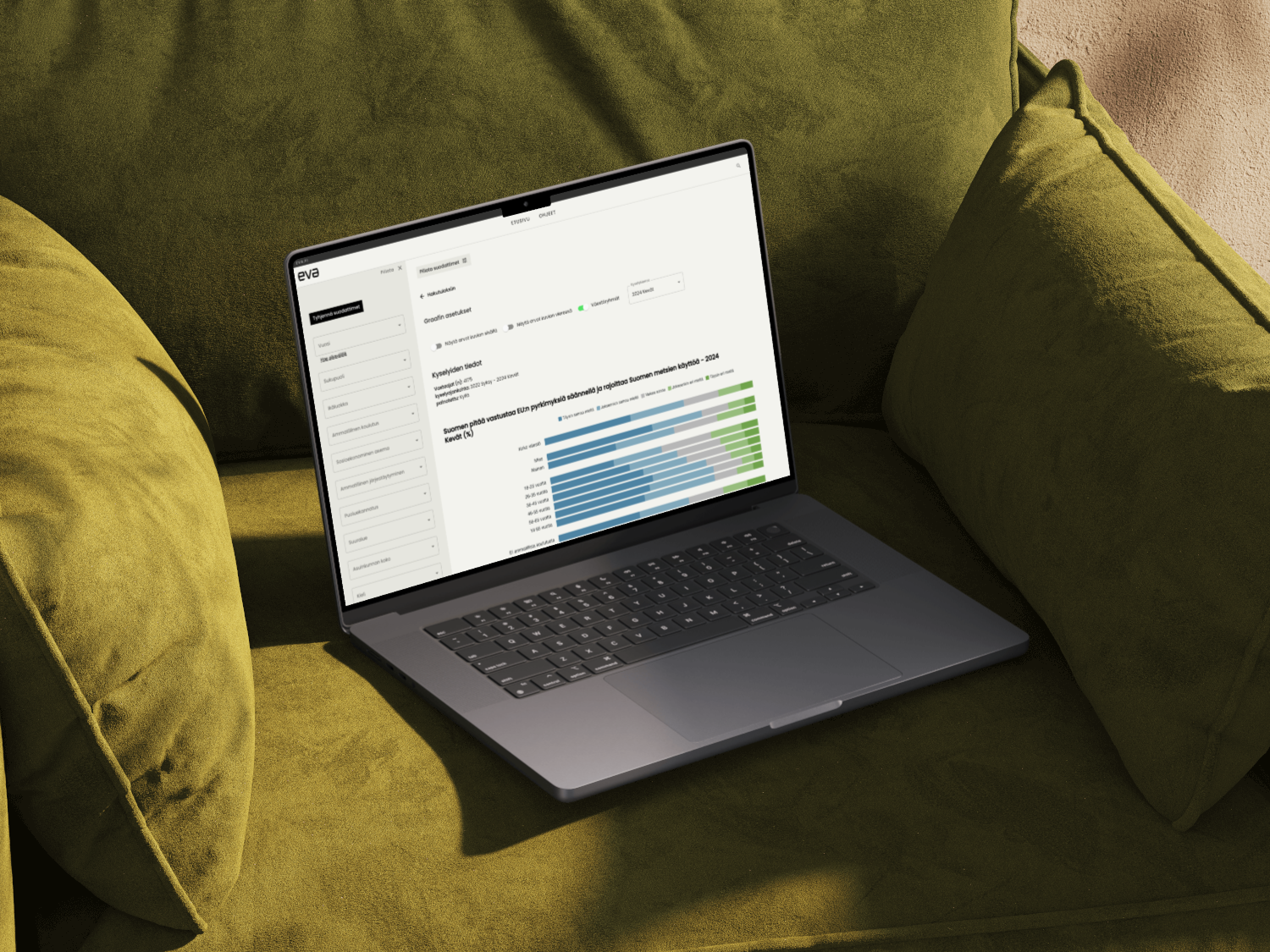
The modernised value bank was launched in April 2025. After the first few survey rounds, it was already clear that information flow and reporting had improved significantly. Material is now available in about half an hour, whereas previously visualising results took several days.
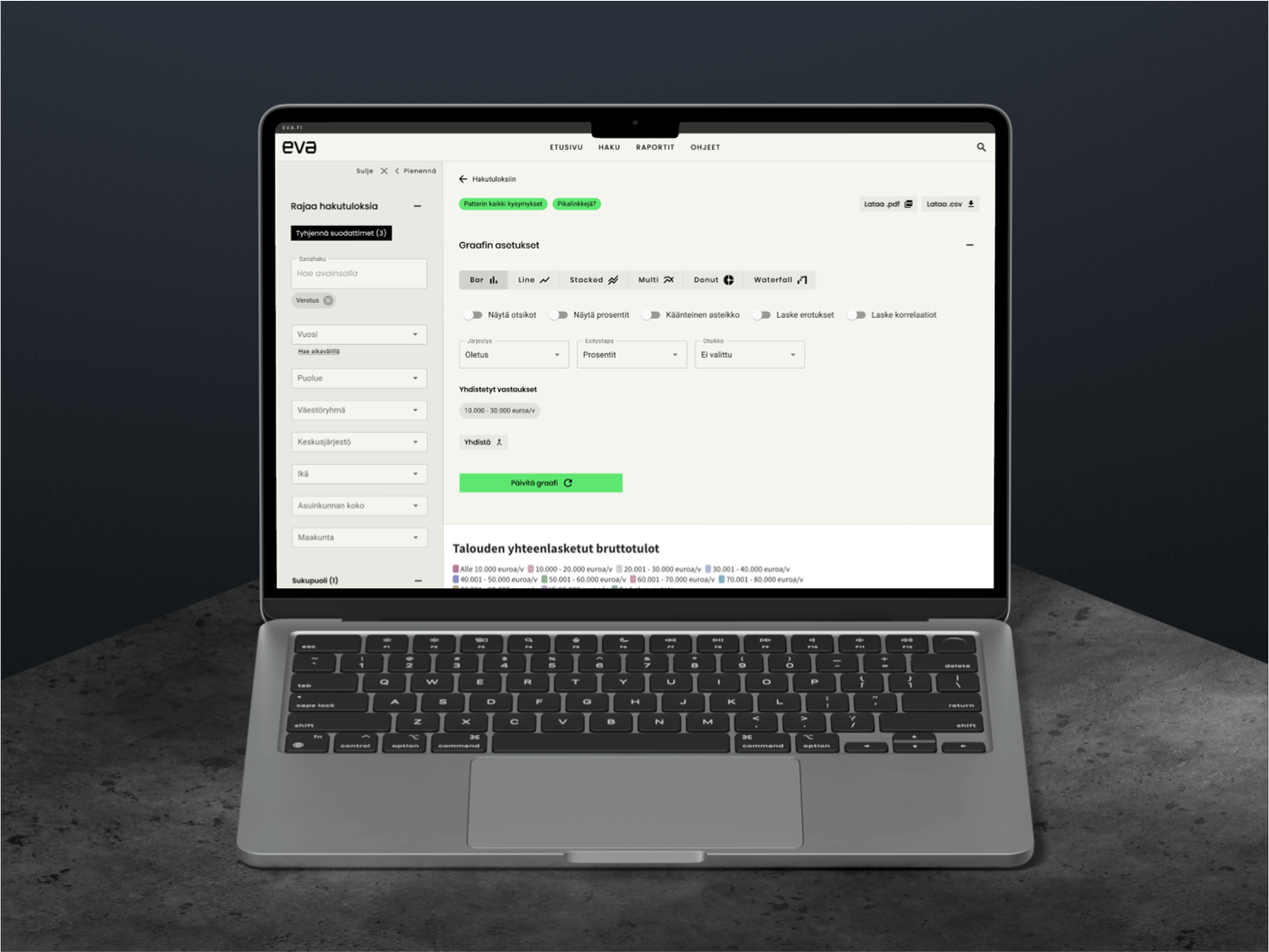
Graphs are generated automatically and can be edited as needed – for example, adjusting colours or scales. This enables targeted, high-quality reporting without extra manual work.
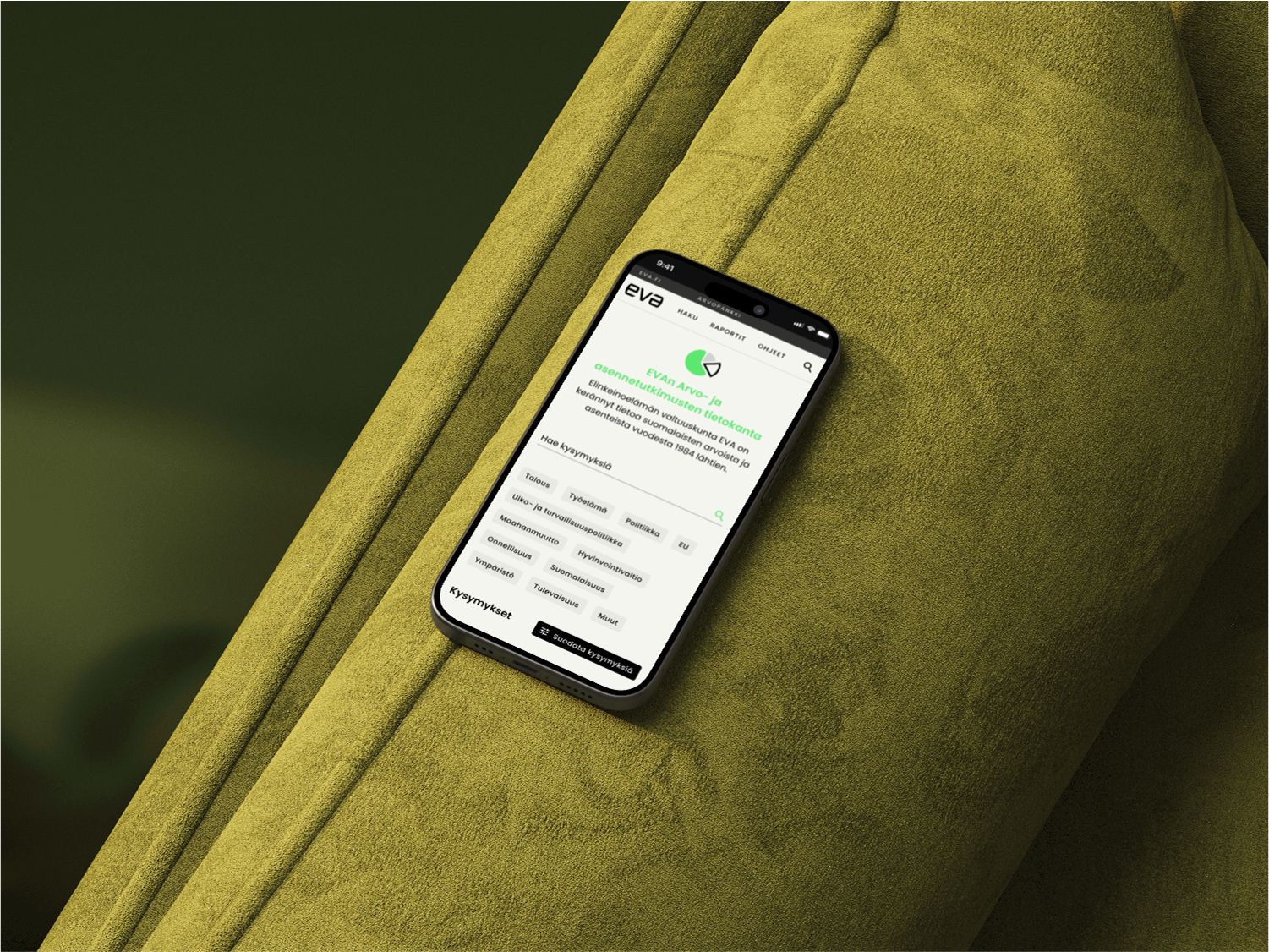
The value bank’s public use has also become more accessible following the modernisation. Users can browse and download materials more smoothly, and survey results are clearly categorised. The availability of figures in vector graphics format makes them easier to use in printed materials and publications.
Working with Sofokus has been smooth and efficient. Meetings have been well prepared, and we have always been given clear estimates of the time required before the next development phase. This has been particularly important for a small organisation.

What was done
- Needs assessment and workshop planning
- UX/UI design for the value bank’s modernised user interface
- Technical implementation and launch of the user interface
- Remodelling data structures and clarifying management
- Automation of visualisations and optimisation of reporting
- Implementation of AI solutions for question categorisation
- Maintenance and planning of further development
Do you also need help streamlining your data management?