

Services
Service design
Service design means basing the development decisions for a digital service on what users and the business actually need, not on assumptions. At Sofokus, service designers and developers work in the same team from definition to delivery and continuous development. With AI, research and prototyping move faster, which frees time for asking, listening and interpreting.


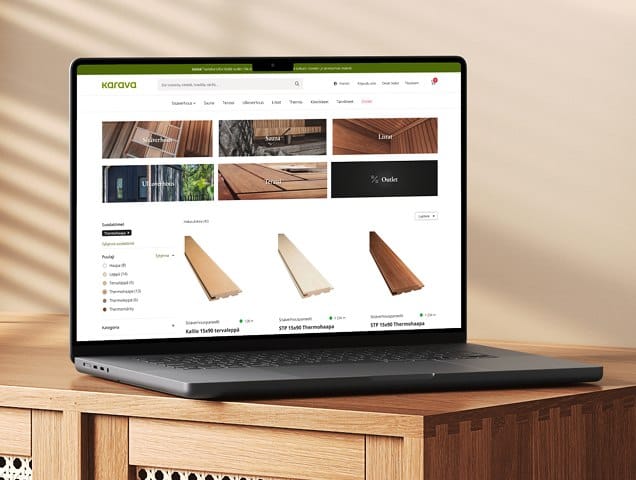
Kärävä
From clarified goals and strategy to B2B digital commerce for the wood products industry
“We now have more flexibility to do everything we want in short term, and are ready to adapt to anything the future brings.”
What we help with
When does service design pay off?
Service design is worth doing when you know what you want to build but the need behind it is still unclear. These situations come up again and again in our client work.
The request is a solution, not a need
A request like “we need a new system” can hide a need that a lighter change would meet, such as an order status view and an automatic notification. We pin down the need before the solution is locked in.
Users drop out halfway
When people start an order or an application and never finish, the cause usually sits somewhere on the service journey. We walk the journey as a user would and fix the points where people give up.
Customer service is overloaded
An unclear service shows up as calls and emails. When information is easy to find and guidance appears where questions arise, fewer people need to get in touch.
There are many kinds of users
Customers, partners and your own staff use the same portal with different rights. We map the roles and edge cases before development starts, because they decide how sign-in and access rights must work.
An old service is slow to develop
A dated interface, weak mobile usability and information that is hard to find all slow development down. We define the renewal so that the service can be developed further based on usage data.
The budget has to go to the right things
Building the wrong thing is the most expensive way to learn what you should have built. A prototype and user testing show where the development budget belongs before it is spent.

What is service design
Service design is more than interface design
Service design looks at the whole service: what users see on screen and what happens behind it. Touchpoints include the website and the app, but also the confirmation email, the invoice, the error message and customer service. The invisible part covers staff work, systems, integrations and data flows.
Digital service design focuses on web services, applications and portals. It combines business expertise, user interface design and software architecture, so that the service is user-centred, technically feasible and aligned with business goals.
Service design is not a wall of sticky notes that never turns into anything concrete, and it is not a separate phase done before the “real work”. It is a continuous cycle of asking, testing and prioritising. The result is a shared understanding of the need, and the document is simply a record of it.
Phases and deliverables
How does a service design project work?
Service design runs through the whole development lifecycle. The first two phases, Discover and Imagine, are usually bought as one definition phase before the technical delivery is agreed. During definition and delivery, AI processes research material and produces first drafts, while people interpret the findings and make the decisions.
-
1. Discover: understanding the need
Definition phase, before development
We explore the problem and the business need without taking a position on the technical solution yet. Methods include user and stakeholder interviews, observation, usability testing of the current service, and data from analytics, sales and support requests. AI transcribes and themes the interviews and surfaces recurring topics in the material. Weighing what those topics mean is the service designer’s job.
Deliverables: a description of the current state and goals made measurable.
-
2. Imagine: designing the solution
Definition phase, before development
We decide how the need will be met: user needs, architecture, the service model and the look and feel. Uncertain ideas are tested with a prototype before any development budget is committed to them. With AI, a clickable prototype can be built from an idea on the same day, so the discussion moves from assumptions to something concrete. AI also helps take user stories, acceptance criteria and specifications from rough draft to finished.
Deliverables: customer journeys, a service blueprint, a prototype, user stories with rationale, a prioritised backlog and the UI/UX design.
-
3. Deliver: building the service
During development
The service is built, and the need stays in view throughout. Designs are refined, user testing continues and decisions are explained. AI helps draft usability test plans, tasks and questions and pull the results together. It can simulate a user, but the tests are run with real users.
Deliverables: a working service, user test results and documented change decisions.
-
4. Evolve: continuous development
Maintenance and further development
We go back to the goals and measure whether the service works as intended. Feedback and usage data guide the choice of the next development step.
Deliverables: measurement results and a prioritised next step.
Why keep design and development in the same team?
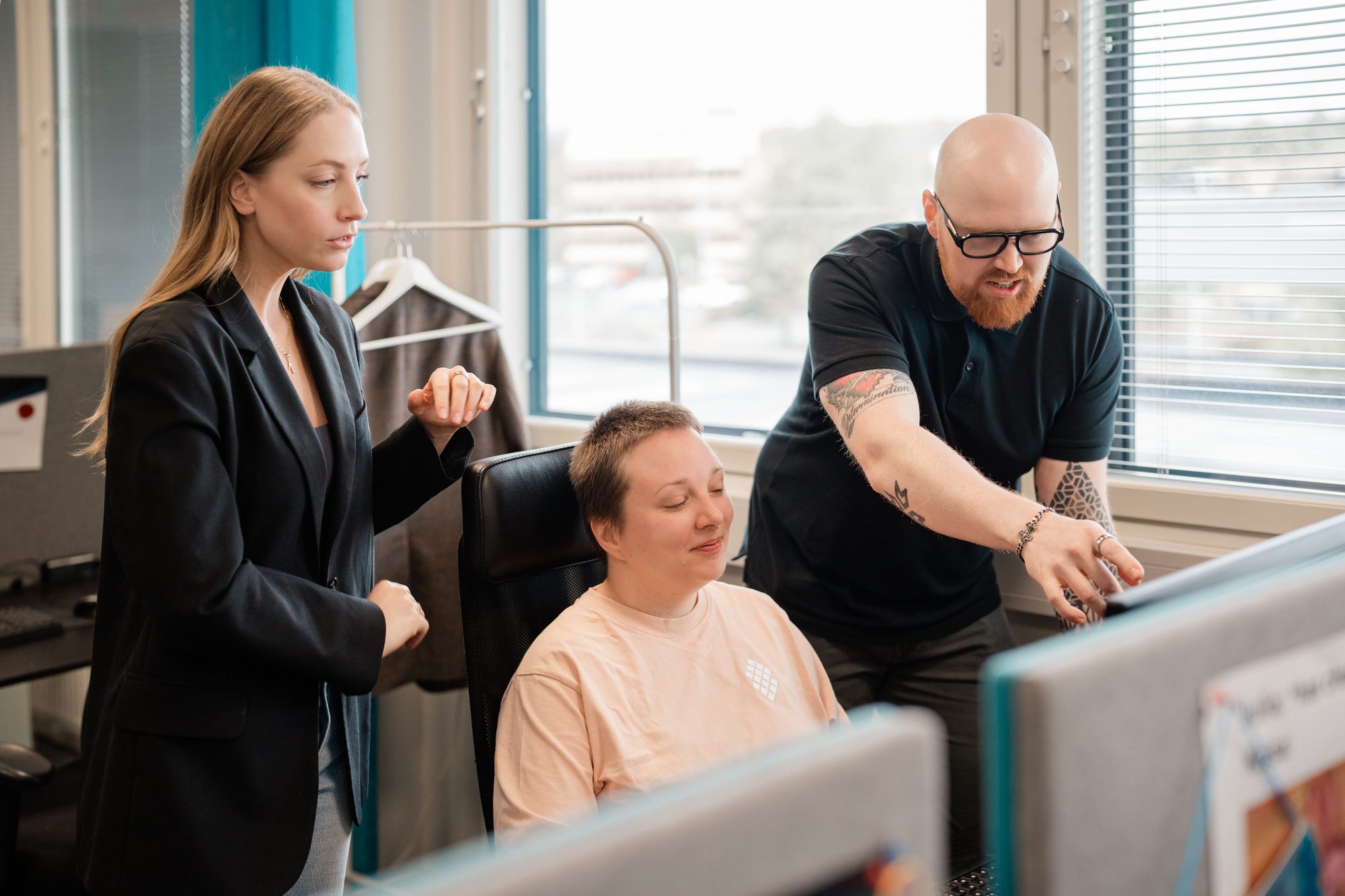
When design and development sit in the same team, the definition does not end up as a document handed over to someone else. At Sofokus, a technical expert takes part in the definition work alongside the service designer. They can tell straight away which solutions are feasible, what integrations and access rights require, and what the smallest version worth learning from would be.
Every user story comes with a rationale, so developers know during delivery why a feature is being built. The same team carries on with maintenance and further development, which means the goals are revisited and the results measured.
Service design is part of the full Sofokus arc: definition, service design, user interface design, software development, integrations and maintenance.
An example of definition work
What does the definition phase look like in practice?
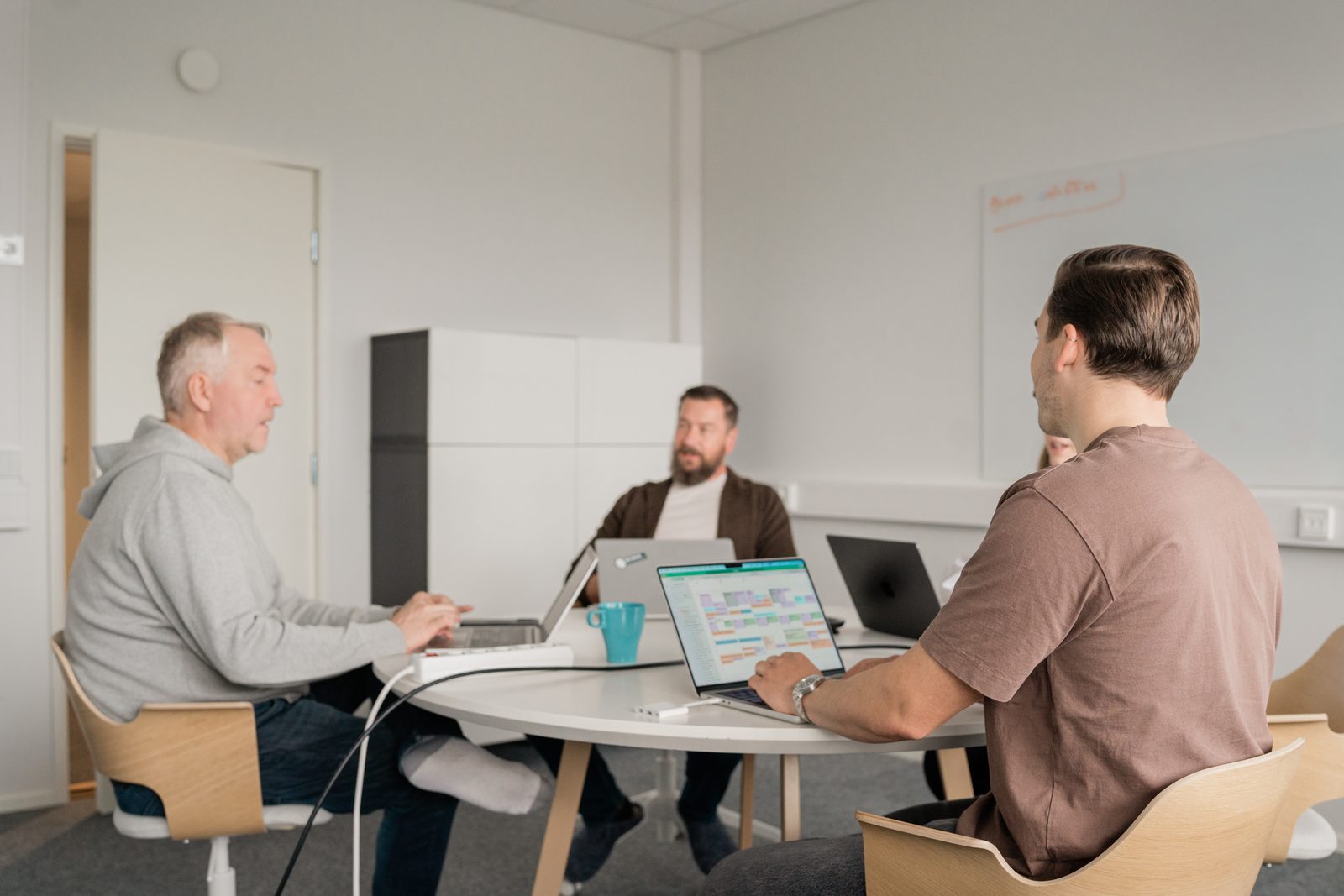
Defining a customer portal can move from a kick-off meeting through four workshops:
- Current state and target state. What works in the current service, what does not, and what the renewal should achieve.
- Users and user stories. Who uses the service and why. Edge cases are requirements, because they decide sign-in, roles and access rights.
- Features and structure. The structure of the service is visualised in Figma so that it can be discussed in concrete terms.
- Technical definition. Integrations, non-functional requirements, architecture and schedule.
The outcome is a requirements specification, user stories, a Figma structure, an architecture proposal and a risk list. Delivery can be agreed on that basis.
Service design references
Examples of our client work
Alisa Bank: clear user journeys in a regulated banking environment
For more than three years, Sofokus has designed the user journeys of Alisa Bank’s online bank and mobile app for both consumers and businesses, including onboarding and KYC flows. The mobile app is rated 4.4/5 in the App Store based on about 1,600 reviews.

Gramex: clearer user journeys and 50% more visitors
We designed and built Gramex’s website renewal, clarifying the user journeys and designing a media portal. Website visits grew by 50% compared with the previous year, and user feedback on the new site averages 4/5.

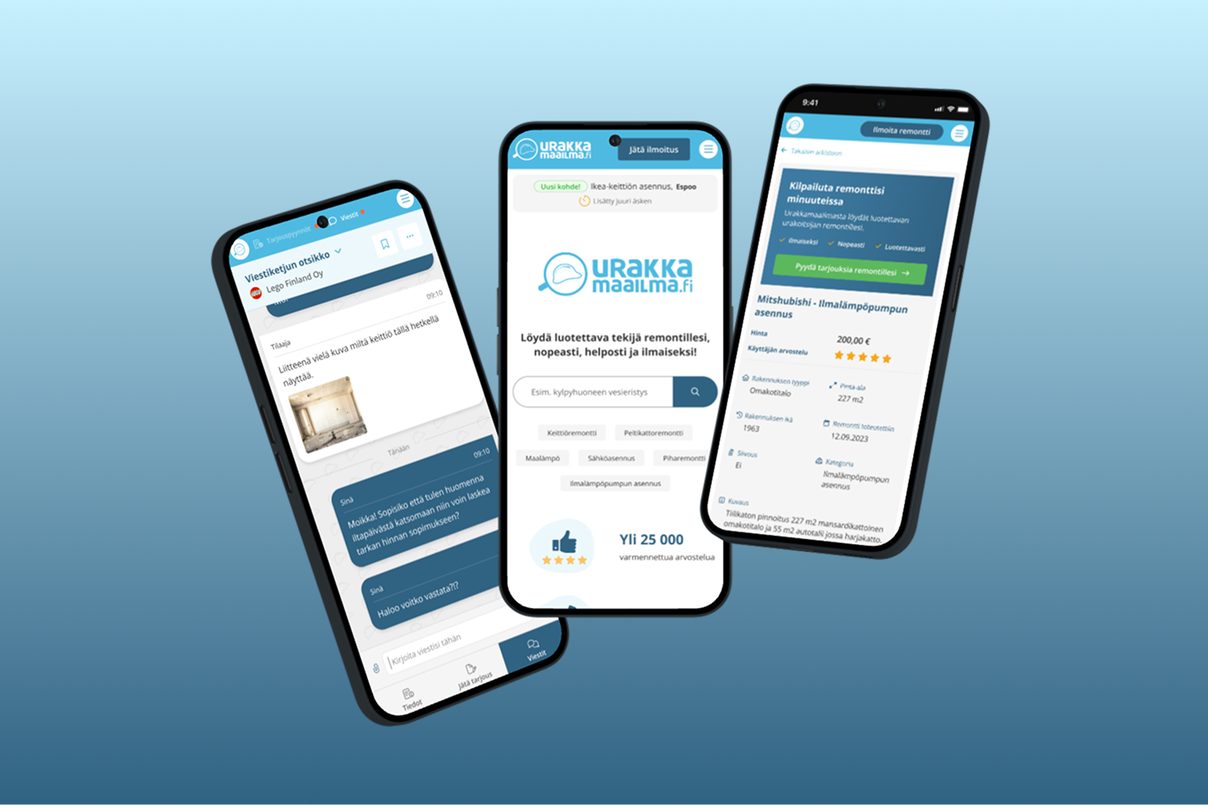
Urakkamaailma: service design for a contractor tendering platform
Urakkamaailma is a digital platform where clients put construction work out to tender among contractors. Sofokus took part in the service renewal with service design and UX/UI design.
Read more about design
Further reading
Business design
Business design applies design methods to the whole business concept, while service design focuses on one or a few services at a time.
User interface design
Interface design turns the service design work into screens, components and interactions that users can rely on.
Prototyping
A prototype lets you test an idea with real users before development budget is committed to it.
Questions about service design
Service design is a way of developing a service from the real needs of its users and the business. It covers the whole service, including the parts users never see: staff work, systems and integrations.
Digital service design is service design applied to web services, applications and portals. The methods are the same, but the work also covers user interfaces, software architecture and integrations, so that the plan can actually be built.
Service design develops one or a few services at a time so that they work smoothly for customers. Business design applies the same principles more broadly and strategically to the company’s whole business concept. Both rest on a thorough understanding of the user.
Typically a requirements specification, user stories with rationale, customer journeys, a prototype or Figma structure, an architecture proposal and a risk list. The most important result is a shared understanding of the need, which the delivery can be agreed on.
It depends on the scope of the service and how many user groups and systems are involved. A focused service design engagement typically takes 1–20 working days (check before publishing). Scope and schedule are agreed at the start.
The price depends on the scope: the number of user groups, touchpoints and back-end systems. A typical service design engagement costs roughly €5,000–30,000 (check before publishing). We estimate the effort from your goals before we start.
Yes. Service design is a service in its own right, and the results of the definition can be used even if the development is done elsewhere. When Sofokus also builds the service, the same team carries on from design to development.
AI speeds up research, prototyping, validation and documentation, for example theming interviews and drafting user stories. A clickable prototype can be ready the same day an idea comes up. People still do the interpreting: they decide what matters and what is worth solving.
Get in touch
Tell us about your project, and let’s talk more. We’ll go through your organisation’s situation and goals and assess together where the project should start.